 Pompeii Private Tour
The Best Time to Visit Pompeii: Months, Slots and Crowds
The best time to visit Pompeii is a compound answer: a month (April-May and October for weather), a slot (morning, always in summer - the park sells 15,000 morning admissions and only 5,000 afternoon ones), and a day of the week (weekdays; school groups own spring mornings). The site itself never closes for weather - open stone, shade almost nowhere - so the calendar is the one lever a visitor fully controls.
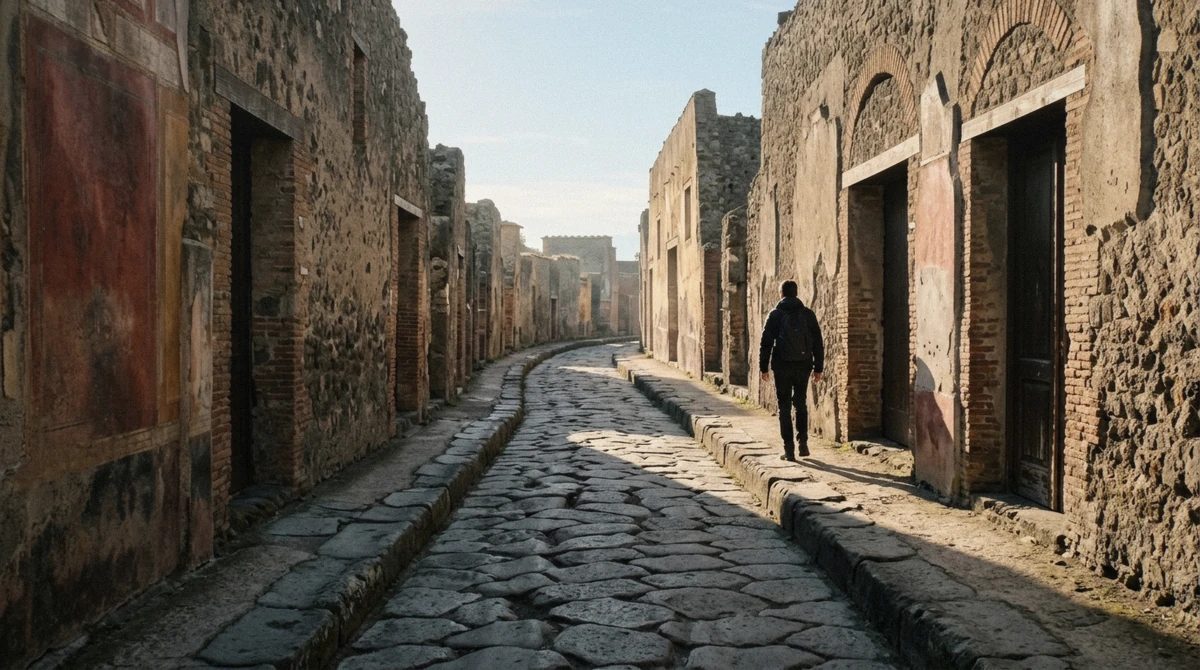
October, 09:15: the light that makes photographers book autumn mornings, with the crowds still thinned by the school calendar.
Quick answer The best months, the morning-slot rule, and what winter hours change
April-May and October are Pompeii's sweet months: workable heat, long-enough days, and crowds below the summer peak. June and September run hot but manageable with an early start; July-August demand the 09:00-13:00 slot - the stones hit 40°C by mid-afternoon and shade is theoretical. Winter (November-March) means short hours - the park closes at 17:00 with last entry 15:30 - but also thin crowds and the free first Sunday. Whatever the month, the daily cap makes mornings structurally better: 15,000 of the park's 20,000 daily admissions sit in the morning slot, so the private tours all run their best inventory there.
Key takeaways
- Booking a summer private tour? The earliest start your date offers - the flagship's 09:00 slots sell first for exactly this reason
- Winter visit? The 15:30 last-entry rule flips the maths: a two-hour tour wants a 12:00-13:00 start at the latest
- The ticket guide explains the two-slot system the cap creates and how it prices your flexibility
The Months, Rated Honestly
Naples-area climate, site conditions, and crowd behaviour by month - rated for a first visit.
| Month | Avg high | Verdict | The honest note |
|---|---|---|---|
| April | 18°C | Excellent | School groups own weekday mornings - go mid-week or accept the energy |
| May | 22°C | The best month | Long days, green hinterland, crowds rising but workable |
| June | 26°C | Good, early starts | Heat arrives late month; 09:00 starts become non-negotiable |
| July | 29°C | Survivable, not pleasant | Peak heat + peak crowds; morning slot or misery |
| August | 29°C | The test | European holidays stack crowds; Italians flee to the coast some weekends |
| September | 27°C | Good, warm tail | Sea temperatures still call; site heat eases mid-month |
| October | 22°C | Excellent | The second May: light, temperatures, thinning crowds |
| November | 17°C | Fair | Rain returns; short days, museum-calm site |
| December | 14°C | Fair | Quiet and atmospheric; the free first Sunday is busy |
| January | 13°C | Fair | Coldest light; canalization of crowds near zero |
| February | 13°C | Fair | Same as January with marginally longer days |
| March | 15°C | Good | Season's ramp; Easter's crowd wave builds late month |
The one-line answer
Early May or mid-October, mid-week, 09:00-13:00 slot, first entry of the day. Every other answer is a compromise with heat, crowds or daylight - all three of which Pompeii charges for in full.

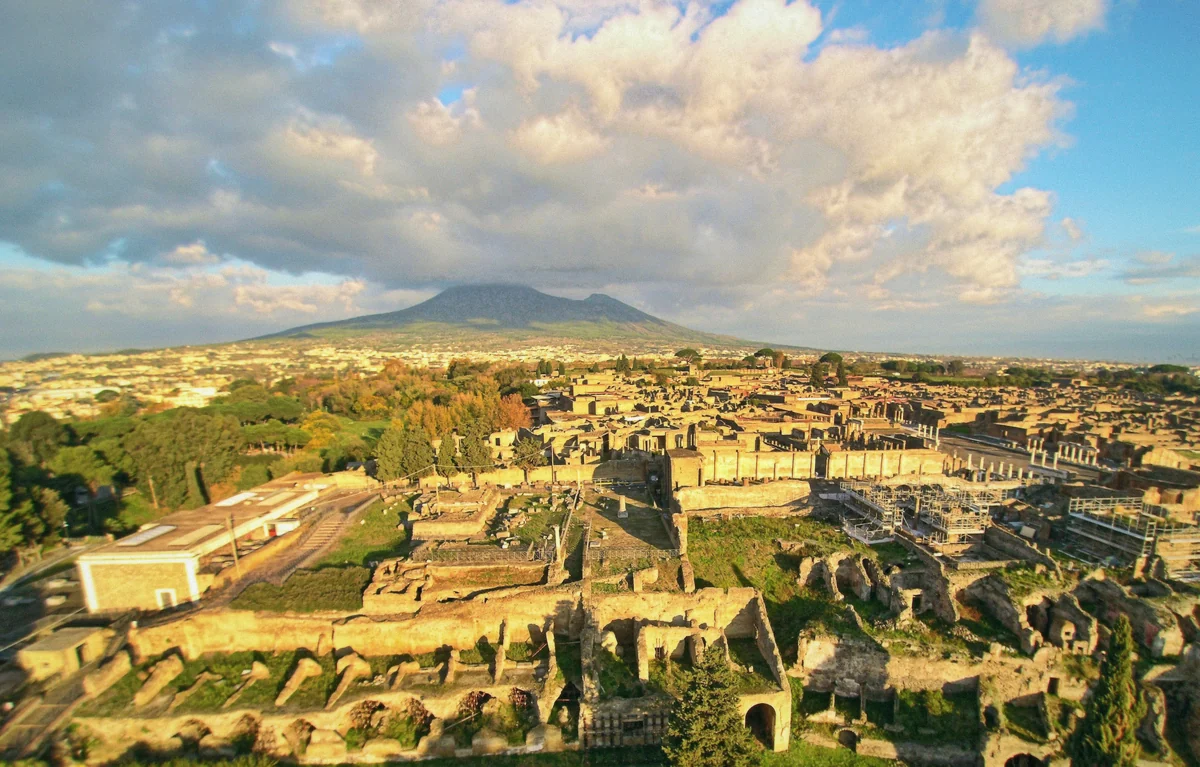
Clear-air days: the month’s real luxury, when Vesuvius reads as a shape instead of a haze. Photo: tamara semina / Wikimedia Commons / CC BY-SA 3.0.
The Two-Slot System: Why Mornings Are Structurally Better
Since the park moved to nominative, timed tickets under a 20,000-a-day cap, the day is split: 15,000 admissions in the 09:00-13:00 slot, 5,000 after 13:00. The arithmetic does the arguing: five times the afternoon inventory would be needed to balance it, and never arrives. Consequences for planning: morning slots sell first (private tours carry 'likely to sell out' flags for them), afternoon visitors share the site with the morning's tail plus everyone unbooked enough to risk the walk-up gamble, and cruise-ship days - Naples docks hundreds of metres from the line - compress into the afternoon and feel it.
Book the morning, or book winter hours where the slot system matters less and the site empties by 15:00 regardless.
The heat clock, for summer bookings
The excavations are an open stone amphitheatre: by 11:00 in July the paving throws real heat and shade is a few awnings at the Forum's edge. A 09:00 private start puts the Forum hour in the day's cool, the theatre hour in warmth and the finish inside two hours of the worst. A 13:00 start in the same month is a different activity - guides pace it, water stops multiply, and the family listing's pacing earns its price.

Low light on the stones - the hour the private tour calendars sell first. Photo: RealCarlo / Wikimedia Commons / CC BY 2.0.
Winter at Pompeii: Short Days, Long Stones
From 16 October to 15 March the park runs winter hours - 09:00 to 17:00, last entry 15:30 - and the character of a visit changes more than the clock suggests. Crowds thin to museum levels; the low sun rakes the streets in the photography the summer glare flattens; rain becomes a real participant (bring the jacket - umbrellas are banned inside the excavations). The first Sunday of each month is free for everyone, which is the year's biggest crowd magnet in miniature - and entry for it cannot be reserved, so the listings' fine print repeats the same warning: queue, and accept the risk.
Private tours run all winter on the same licensed-guide rosters, at 12:00-13:00 starts that fit the daylight.
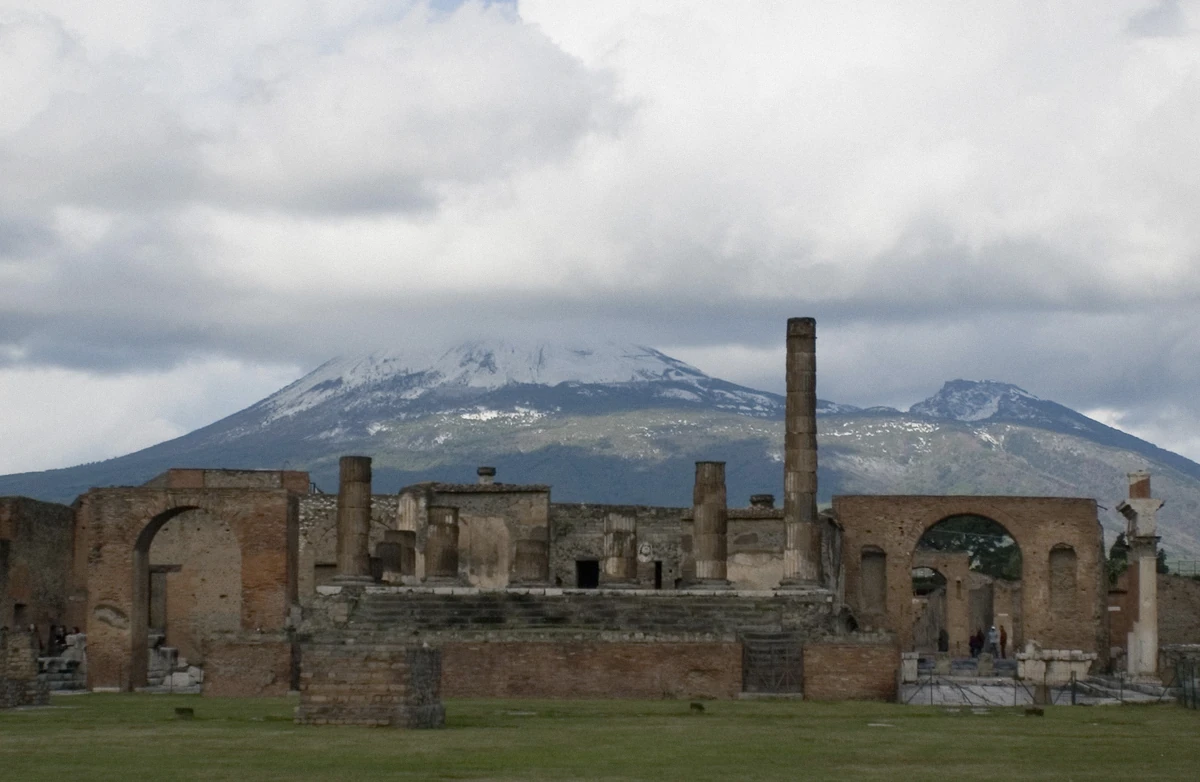
Shoulder-season air: April and October give the whole skyline to every visitor. Photo: ElfQrin / Wikimedia Commons / CC BY-SA 4.0.
Weekdays, Weekends, and the School-Group Season
Two crowd patterns layer over the monthly ones. Weekends bring Italian families and the bay's day-trippers - busier, livelier, fine. Spring weekdays bring the school groups - hundreds of children in class-cohorts, mostly on 09:00-12:00 rotations through the Forum-theatre axis; they are good-natured and they are loud, and mid-week May mornings run the year's densest foot traffic as a result. The fix is the same for both: the east end (amphitheatre, Garden of the Fugitives) stays quiet even when the Forum is a classroom, and three-hour routes that reach it spend the crowded hours in the calm quarters.
Best Time to Visit Pompeii: Questions
What is the best month to visit Pompeii?
May for the combination - warm but pre-peak, long days, the hinterland green - with October the close second. July and August are the crowd-and-heat test; winter is quiet, cold-light and short-hours.
How many hours do you need in Pompeii?
Two hours covers the civic core properly with a guide; three reaches the theatres district and, on the fullest routes, the east end. Add travel to the gate, the ID check and the walk out, and a realistic Pompeii morning runs four hours door to door. Visitors on the 3-day ticket split the site across mornings instead of stretching any single visit.
What is the quietest day to visit Pompeii?
A mid-week day in the first half of December or the second half of January - the depth of the low season, outside the free first Sunday, with school groups gone and the cruise calendar thin. In season, the quiet pattern is mid-week + first entry: Tuesdays and Wednesdays in May or October at 09:00 are the closest the busy months come to the winter calm.
Should I visit Pompeii in the morning or afternoon?
Morning, structurally: the park sells 15,000 morning admissions against 5,000 afternoon, so mornings hold the best inventory, the coolest stones and the freshest guides. Afternoon suits winter visits (the 15:30 last entry fits it) and second visits.
Is Pompeii open in winter?
Every day except 25 December and 1 January - winter hours are 09:00-17:00 with last entry 15:30. Bring the rain jacket (umbrellas are banned inside the excavations) and expect museum-level crowds and the year's best light.
How hot does Pompeii get in summer?
Naples-area July-August highs run 29°C, and the site's open paving runs hotter than the air by early afternoon - 40°C ground readings are ordinary. Shade is minimal; the 09:00-13:00 slot, water, and hats are the three-part answer.
Is the free first Sunday worth it?
It saves EUR 20 and costs the reservation: entry cannot be booked ahead for it, so the day runs on queues - the busiest first-Sunday of any Campanian site, by the park's own framing. Worth it for flexible, queue-tolerant visitors in the quiet months; a bad trade in high season.
Is Pompeii really worth it?
Yes - and the calendar decides how much. Pompeii is the world's best-preserved Roman city, but in July afternoon heat with school-group crowds it can feel like a march between walls; the same visit in May or mid-October, morning slot, is a genuinely great day. Reviewers who came unprepared in peak summer and returned in shoulder season say it twice: worth it, timed right. The month-by-month table makes the timing case.
Why is Pompeii considered dark tourism?
Because the site preserves a death as much as a city: about 2,000 victims died in the eruption, and the plaster casts - most famously at the Garden of the Fugitives - show them where they fell. That gravity is part of the visit's power and the reason guides handle the casts and the eruption story with care; the family tour exists partly so parents can calibrate how much of it their children meet.
The Cruise-Day Calendar
Naples is a working port, and on heavy cruise days the site's crowd curve is written before anyone books anything. Ships tender thousands ashore; the organised coaches take the 10:00-14:00 band almost exactly, which squeezes two effects into one day: the morning slot's independence travellers meet the coach wave at the Forum around 11:00, and the afternoon slot - only 5,000 places park-wide - fills with passengers who bought shore-excursion bundles. If your own dates are fixed by a cruise, the plays are simple and the comparison's listings support both: book the earliest private start you can (a 09:00 flagship slot finishes before the coach wave lands), or go the other way entirely - a late-afternoon entry in June, when the coaches have gone and the stones have kept some of their heat, is a quieter site than the numbers suggest.
What does not work is the middle: a 12:30 arrival on a three-ship day spends its first hour in the Forum queue and its last hour in the crowd.
Reading the port schedule
The Naples port authority publishes ship calls; a check the week you travel tells you which days to avoid. As a rule of thumb: one ship in port barely registers, two ships make the 10:00-14:00 band busy, three or more make it heavy - and Mediterranean Saturdays in July stack three and four. Pair that with the month-by-month table and the quiet windows fall out: mid-week, shoulder season, first entry of the day.
Spring green beyond the walls - one more argument for the April-May window. Photo: Sergey Ashmarin / Wikimedia Commons / CC BY-SA 3.0.
How the Two Slots Really Fill
The park's 20,000-admission cap is not one queue but two windows with different characters, and the difference is worth pricing into a plan. The morning slot (09:00-13:00, 15,000 places) holds the guided-tour inventory - every private listing runs its best start times there - and it empties steadily after 13:00 as morning tickets expire. The afternoon slot (13:01 onward, 5,000 places) is the scarcity play: fewer places, lower demand outside summer, and in the warm months the only part of the day a thoughtful visitor should skip.
The honest exceptions: winter, when 15:30 last entry makes a 13:00 start the natural choice, and repeat visitors on the 3-day ticket, for whom a 14:00 arrival in April is a slow, golden-hour gift rather than a scheduling error.
The one hour that decides the experience
Whatever the slot, the first hour on site is the best one - cooler stones, thinner crowds, guides fresh. Private listings price that fact implicitly: the earliest starts on the flagship and its family variant are the first to go each day, and a booking made a month out for 09:00 beats a booking made two days out for 12:00 at the same price.
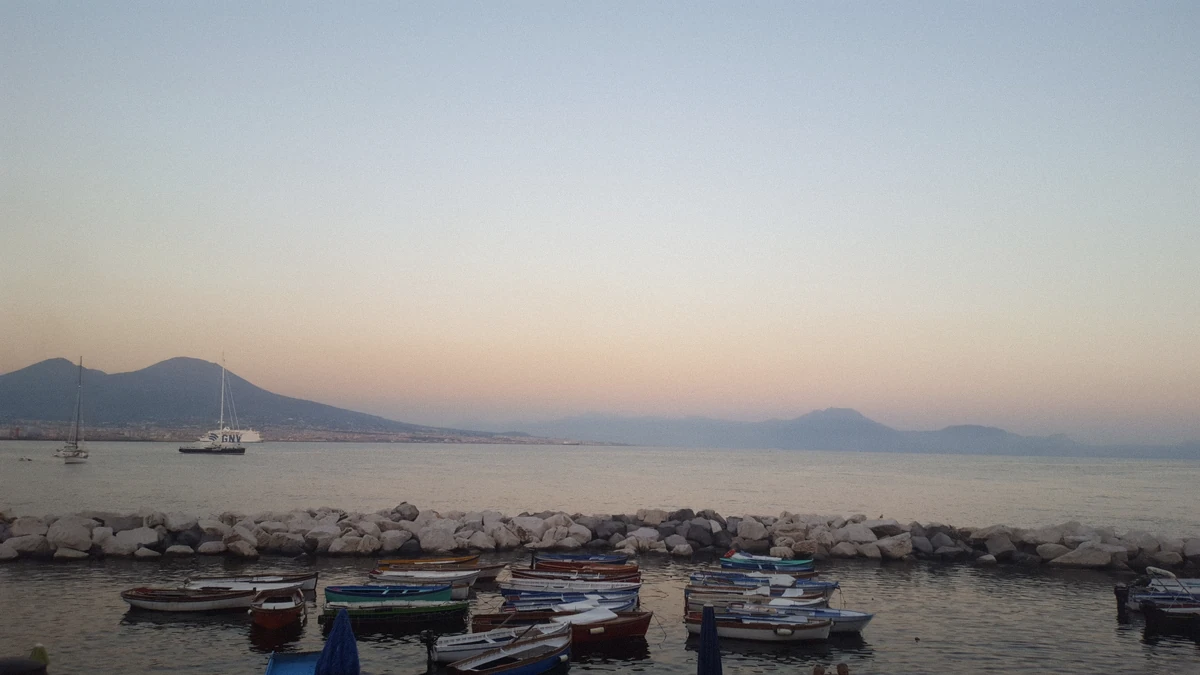
The day’s end over the bay: what the 09:00 starters earn by mid-afternoon. Photo: H.A.W.C 101 / Wikimedia Commons / CC BY-SA 4.0.